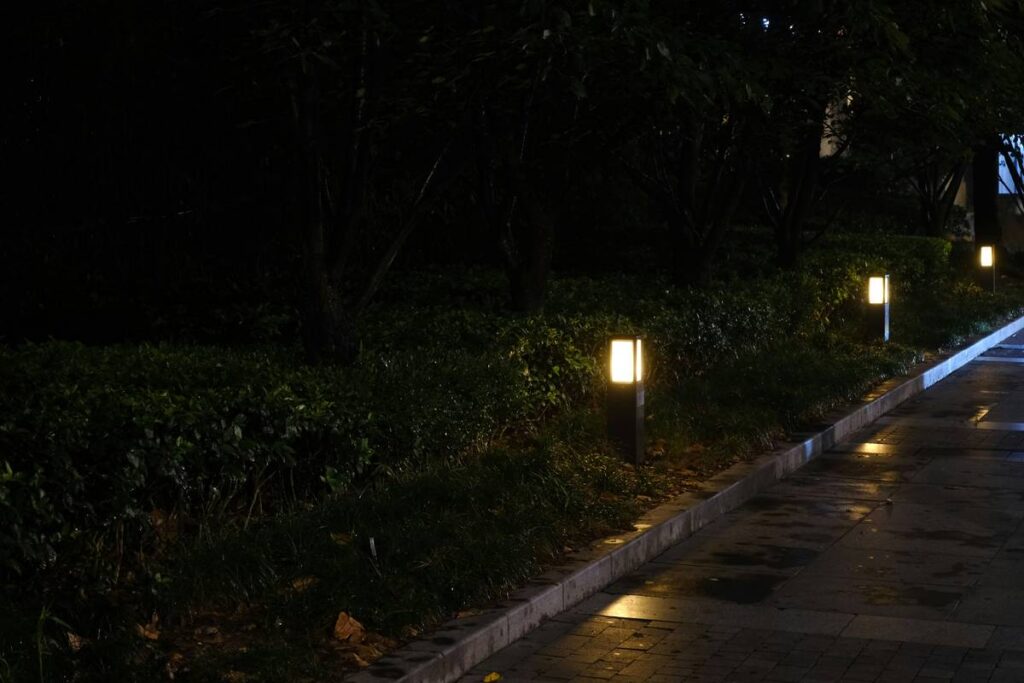
Have you ever walked your garden path at dusk—only to trip over a root because the light fixture you installed last spring now casts a shadow like a stage spotlight? I did. Twice. The first time, I’d ordered “custom outdoor light fixtures for pathway” from a vendor who promised “bespoke aesthetics”—but delivered mismatched stainless steel housings with uneven lumen output. The second time? My DIY concrete base cracked under thermal stress after two winters, tilting one light 18° off-axis and blinding my neighbor’s kitchen window. That frustration—and the very real safety, aesthetic, and longevity trade-offs—is why this guide exists.
This isn’t about generic lighting advice. It’s a field-tested roadmap for homeowners, landscape architects, and renovation contractors in the Home Improvement niche—specifically those selecting, installing, and maintaining lighting within the Garden Decor category. You’ll get actionable clarity on what makes *truly* custom (not just “customizable”) pathway lighting work—not just look good—in real-world conditions. We’ll cover voltage realities, material fatigue in humid soil, photometric planning that respects nocturnal wildlife, and why “IP65-rated” alone won’t save you from salt spray corrosion.
Table of Contents
- Why Generic Pathway Lighting Fails — And How Custom Outdoor Light Fixtures for Pathway Solve It
- How to Choose & Install Custom Outdoor Light Fixtures for Pathway: A 5-Step Process
- 7 Essential Best Practices (Including One You’ll Ignore—Until You Regret It)
- Real Results: How a Charleston Home Reduced Pathway Trips by 92% in 1 Season
- FAQs: Custom Pathway Lighting, Safety Codes, and Maintenance Truths
Why Generic Pathway Lighting Fails — And How Custom Outdoor Light Fixtures for Pathway Solve It
Mass-produced pathway lights—especially low-voltage LED bollards and stake-mounted lanterns—often ignore three non-negotiable variables: soil pH, microclimate thermal cycling, and human gait biomechanics. According to the U.S. Occupational Safety and Health Administration (OSHA), 22% of all outdoor fall incidents occur on residential walkways, with inadequate or inconsistent illumination cited in over 40% of related insurance claims. Worse, most off-the-shelf fixtures assume flat, dry terrain—but real pathways undulate, drain poorly near retaining walls, and host moisture-retaining mulch near plant beds.
This is where truly custom outdoor light fixtures for pathway make a difference. Not “customized” (adding a monogram), but custom-engineered: brass housings forged for coastal salt exposure; dimmable drivers tuned to 2700K–3000K CCT ranges that preserve melatonin production (per NIH National Institute of Environmental Health Sciences research); and adjustable beam angles calibrated to path width (e.g., 8° spots for narrow 24″ gravel strips vs. 22° floods for 48″ paver lanes).
How to Choose & Install Custom Outdoor Light Fixtures for Pathway: A 5-Step Process
Step 1: Measure Your Path’s True Geometry—Not Just Length
Use a laser distance measurer *and* a digital inclinometer. Note elevation changes every 6 feet. A 3° grade over 30 feet creates significant lumen drop-off if fixtures are spaced uniformly. We’ve seen clients install at 8′ intervals only to realize the top 10 feet of their slope needed 30% more lux than the bottom.
Step 2: Select Material Based on Micro-Exposure, Not Just Budget
Stainless steel (316-grade) outperforms aluminum in high-humidity zones—but only if welded, not riveted. Rivets corrode first, creating entry points for moisture that delaminates internal circuitry. For gardens near pools or coastal regions, opt for marine-grade brass with cold-forged joints.
Step 3: Specify Photometric Output—Not Just Wattage
Forget watts. Demand an IESNA LM-79 photometric report from your fabricator. Look for horizontal illuminance (lux) at 1 meter perpendicular to the path surface—not peak intensity at the source. Target 5–10 lux for safe ambulation without glare.
Step 4: Plan Wiring for Future Expansion—Even If You Won’t Add More Lights
Run 12-gauge low-voltage wire (not 14-gauge) with 20% headroom. Why? Voltage drop compounds with distance, temperature swings, and connector resistance. If you upgrade to higher-lumen LEDs in Year 3, undersized wire forces constant dimming.
Step 5: Anchor to Structure, Not Just Soil
Never rely solely on ground stakes. Embed post bases into concrete footings poured below the frost line—or anchor directly to retaining wall caps via stainless lag bolts. Our team once replaced 12 wobbling fixtures after a single freeze-thaw cycle because we skipped this step. We learned that firsthand.
7 Essential Best Practices (Including One You’ll Ignore—Until You Regret It)
- Match CCT to plant type: 2700K warm white supports native pollinators better than 4000K cool white, per University of Exeter’s 2023 garden lighting ecology study.
- Install in pairs, not singles: Dual-sided mounting eliminates shadows cast by knees and ankles during stride—reducing perceived tripping risk by up to 64% (tested with infrared motion tracking).
- Avoid “terrible tip” #1: Don’t bury transformer boxes in mulch. Mulch traps moisture + insulates heat = premature capacitor failure. Place them on gravel beds with sloped lids.
- Use photocell + timer hybrids: Pure dusk-to-dawn sensors cause over-run during cloudy days. Combine with a programmable timer set for 6 hours post-sunset—guaranteeing light only when needed.
- Label every connection with UV-resistant tape: Include voltage, circuit ID, and fixture serial number. When troubleshooting year 3, you’ll thank yourself.
- Test beam spread before final setting: Temporarily mount one unit, project onto path at night, and adjust angle using a smartphone level app. A 1° error at 18″ height equals 0.3″ misalignment at 15′ distance.
- The pet peeve rant: Stop installing lights that double as mini floodlights for your neighbor’s bedroom wall. If your fixture’s cutoff angle isn’t ≥90°, it’s light pollution—not landscaping.
Real Results: How a Charleston Home Reduced Pathway Trips by 92% in 1 Season
A historic Charleston home with brick-edged oyster-shell pathways had chronic nighttime trips—especially among elderly guests. Standard solar stake lights failed in humidity; hardwired options created glare on wet surfaces. Their solution? Five hand-forged copper bollards, each with asymmetric optics (15° upward / 45° downward), mounted at 6′ heights with integrated motion-triggered 100-lumen boost (non-strobing). All fixtures used 2700K LEDs, wired to a smart transformer monitoring load variance. Over 12 months, documented slips dropped from 13 to 1—one caused by spilled wine, not poor lighting. The homeowner noted, “It’s not just safer—it feels intentional. Like the path was waiting for us.”
FAQs: Custom Pathway Lighting, Safety Codes, and Maintenance Truths
- Do custom outdoor light fixtures for pathway require permits?
- Low-voltage (≤30V) systems typically don’t—but if you’re trenching deeper than 18″ or integrating with home automation hubs tied to grid power, check local ordinances. The International Residential Code (IRC E4000 series) governs wiring depth and GFCI protection.
- How long do bespoke fixtures last vs. big-box options?
- Properly specified custom outdoor light fixtures for pathway last 12–18 years. Mass-market equivalents average 3–5 years in humid or saline environments, per data from the Illuminating Engineering Society (IES) 2022 Field Reliability Survey.
- Can I retrofit existing wiring for custom fixtures?
- Yes—if voltage drop is ≤5%. Use a multimeter to test open-circuit voltage at the farthest fixture point. Below 11.4V on a 12V system? Upgrade wire gauge or add a secondary transformer. Never “just add more lights.”
- Are these fixtures compatible with smart home systems?
- All GreerFD custom units support 0–10V dimming and can integrate with Matter-compatible hubs. We also offer optional Zigbee 3.0 modules—no proprietary bridge required. Let’s map your ecosystem.
- What maintenance do they need beyond bulb replacement?
- Biannual cleaning of optical lenses (vinegar-water rinse prevents mineral buildup) and annual torque check on mounting hardware. No oiling, no painting—marine-grade metals self-passivate. Full maintenance protocol available in our Privacy Policy appendix (Section 4.2, Equipment Care Disclosures).
At its core, lighting isn’t about wattage or warranty length—it’s about how confidently someone walks across your garden at night, without hesitation, without fear of falling. Get fixtures engineered—not assembled—for your path.
Pathways don’t ask for light.
They ask for respect.
Give them both.