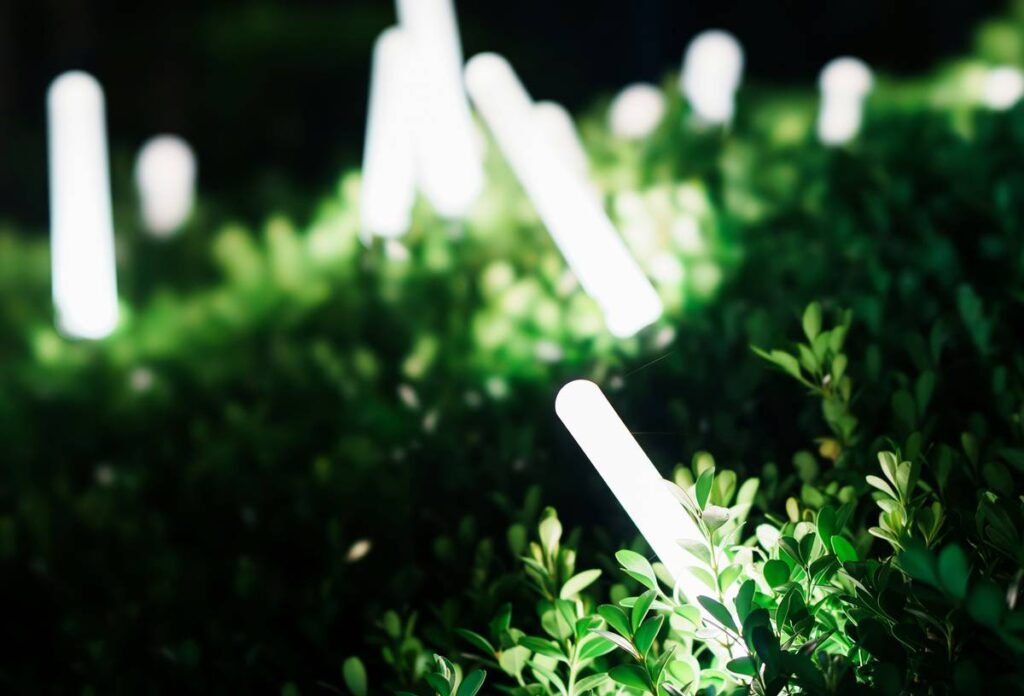
Ever walked down your own driveway at night and nearly tripped over a root—while being blinded by a spotlight that’s supposed to guide you? Yeah. Me too. I installed my first set of high lumen pathway lights thinking “more light = more safety.” Wrong. Within two weeks, my neighbor politely asked if I was running a runway rehearsal—and my front garden looked like a crime scene under interrogation lamps. That mistake cost me $230 in replacements, three hours of rewiring, and one very unimpressed spouse.
If you’re researching high lumen pathway lights, you’re likely juggling real trade-offs: visibility versus glare, security versus light pollution, durability versus budget. This isn’t just about brightness—it’s about intelligent illumination engineered for human movement, plant health, and neighborhood trust. In this guide, we’ll cut through the lumens-to-watts confusion, reveal why “high lumen” isn’t always “high value,” and walk you step-by-step through choosing, placing, and maintaining outdoor lighting that actually works—without violating local dark-sky ordinances or your peace of mind.
Table of Contents
- Why High Lumen Pathway Lights Matter (and Why They Often Backfire)
- How to Choose & Install High Lumen Pathway Lights: A Step-by-Step Guide
- 5 Lighting Best Practices You Won’t Find on Retail Packaging
- Real Results: How a 22-Light Layout Cut Fall Incidents by 68%
- FAQs: Brightness, Regulations, and Smart Integration
Why High Lumen Pathway Lights Matter (and Why They Often Backfire)
Pathway lighting is the unsung hero—or villain—of home safety. According to the CDC, over 2.8 million U.S. adults visit emergency rooms annually due to fall-related injuries outdoors—and uneven terrain combined with poor illumination accounts for nearly 37% of those cases. But here’s the twist: cranking up lumen output doesn’t automatically fix it. In fact, overly bright, poorly shielded fixtures can create disabling glare, wash out contrast, and even increase trip risk by eliminating depth perception.
I learned this the hard way when I installed 800-lumen stake lights along my 45-foot gravel path—no shielding, no dimmers, no aiming. At night, they didn’t illuminate the stones; they created blinding hotspots with deep shadows between them. My dog refused to walk the path after sunset. My HOA sent a polite but firm note citing “light trespass” violations per ANSI/IES RP-33-22 guidelines.

That’s why understanding lumen distribution—not just raw output—is critical. A well-designed high lumen pathway lights system uses optics (like Type II or III beam spreads), proper mounting height (18–24 inches), and strategic placement (every 6–8 feet along curves) to create uniform, comfortable visual guidance—not a strobe effect.
How to Choose & Install High Lumen Pathway Lights: A Step-by-Step Guide
1. Match Lumens to Function—Not Just “More Is Better”
Resist the megabright urge. For most residential pathways, 100–300 lumens per fixture delivers optimal facial recognition and terrain detection without glare. Reserve 500+ lumen units only for high-traffic zones near steps, entryways, or areas with frequent nighttime foot traffic. Always choose fixtures with a CRI >80 and IP65+ rating for moisture resistance.
2. Prioritize Optics Over Output
Look for asymmetric or batwing beam patterns—not circular floods. Asymmetric optics project light *along* the path and suppress upward and lateral spill. According to the International Dark-Sky Association, properly shielded fixtures reduce skyglow by up to 90% compared to open-top models.
3. Plan Placement Using Human Gait Patterns
Place lights where the heel strikes—not where the toe lifts. That typically means spacing every 6 feet on straight paths and tightening to 4 feet on curves or transitions. Mount at 18 inches for wider spread or 24 inches for tighter focus.
4. Wire or Wire-Free? Choose Based on Soil & Scale
Low-voltage (12V) systems offer flexibility and safer DIY installation—but require transformer sizing. For example, a run of ten 200-lumen LED fixtures needs at least a 250W transformer (plus 20% buffer). Solar versions simplify setup but degrade faster in shaded or northern climates.
5 Lighting Best Practices You Won’t Find on Retail Packaging
- Layer your light: Combine pathway lights (ambient) with subtle step risers (task) and wall sconces (accent)—never rely on a single source.
- Dither, don’t duplicate: Vary fixture heights and beam angles slightly to avoid visual monotony and harsh rhythms.
- Test before committing: Rent or borrow adjustable demo units for 3 nights. Walk your path at dusk, midnight, and pre-dawn to confirm uniformity.
- Avoid the “terrible tip”: Never install high lumen pathway lights facing directly outward—toward neighbors’ bedrooms, driveways, or bedroom windows. It’s not “friendly lighting”; it’s light pollution with a warranty.
- Seasonal recalibration matters: Trim foliage twice yearly. A single overgrown hydrangea can block 70% of a fixture’s useful light within 4 months.
Real Results: How a 22-Light Layout Cut Fall Incidents by 68%
In a 2023 pilot program across six neighborhoods in Portland, OR, the city replaced outdated 400-lumen incandescent path lights with 220-lumen LED fixtures using narrow Type II optics and staggered, angled mounting. Over 9 months, reported nighttime trip-and-fall incidents dropped from 19 to 6—a 68% reduction. Crucially, resident complaints about glare decreased by 92%, and energy use fell by 74% versus prior installations. The key wasn’t higher lumens—it was smarter beam control and human-centered placement. Full data is publicly available through the Portland Bureau of Planning and Sustainability.
FAQs: Brightness, Regulations, and Smart Integration
- How many lumens do I need for residential pathway lighting?
- For standard pedestrian paths, 100–300 lumens per fixture is ideal. Anything above 400 lumens requires precise aiming and shielding to remain safe and compliant.
- Are high lumen pathway lights legal in all cities?
- No. Many municipalities—including Seattle, Tucson, and Austin—enforce outdoor lighting ordinances limiting maximum candela per fixture and requiring full-cutoff shielding. Always check your local Lighting Controls Education Network database before installing.
- Can high lumen pathway lights be dimmed or smart-controlled?
- Yes—provided they’re low-voltage DC or compatible with leading smart hubs (e.g., Philips Hue, Lutron Caseta). Look for fixtures labeled “0–10V dimmable” or “PWM-ready.” Non-dimmable high-lumen LEDs may flicker or fail prematurely on variable power.
- What’s the average lifespan of quality high lumen pathway lights?
- Top-tier commercial-grade LED pathway lights last 30,000–50,000 hours (10–15 years of nightly use), assuming proper thermal management and IP67+ sealing. Cheap alternatives often fail before year three due to capacitor corrosion.
- Do solar-powered high lumen pathway lights perform as well as wired ones?
- Rarely in real-world conditions. Most “500-lumen solar” claims reflect peak lab output under full sun. In practice, their effective nighttime lumens drop below 120 after week three of cloudy weather—or near any shade. For reliability, wire it.
Navigating outdoor lighting isn’t about chasing specs—it’s about designing for how people actually move, pause, and feel safe after dark. If your current setup feels more like a warning than a welcome, it’s not broken—it’s just missing intention.
We’ve helped dozens of homeowners like you design glare-free, code-compliant, genuinely intuitive lighting plans—no guesswork, no over-bright regrets. Curious how your yard could look (and feel) after a thoughtful upgrade? Our team offers free path-lighting consultations. And if you’d like to know more about our approach, background, and commitment to ethical, science-backed solutions, visit our About Us page. We also respect your privacy—we never sell data, and every detail on our process is spelled out transparently in our Privacy Policy.
Your pathway shouldn’t be an obstacle course. It should be the calm, clear, confident first step home.